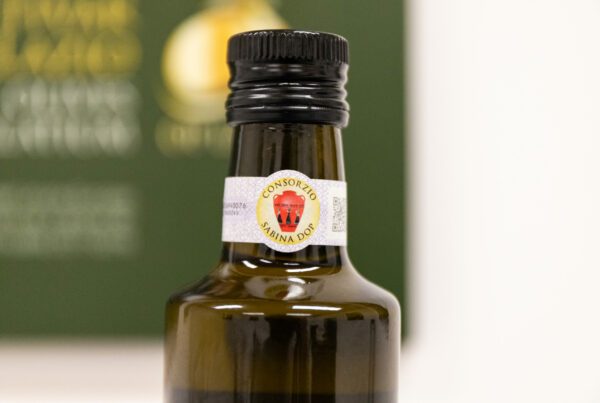
Extra virgin olive oil enters the kitchen every day, often without a second thought: it gets poured, heated, mixed. It’s so present that it ends up being taken for granted. Yet most of the waste linked to oil isn’t about quantity, but about using it the wrong way. A few precautions are enough to make the most of it, without throwing away its qualities through how it’s used.

Raw or cooked? It depends on the oil
The first misconception is thinking that a good oil should only be used raw, like a delicate object to be protected. In reality, extra virgin oil is stable, withstands heat and is also suitable for cooking. What changes is which oil to use and how. An oil rich in green aromas, with pronounced bitterness and pungency, gives its best raw: on a legume soup, on vegetables, on grilled meat or on a slice of bread. There, heat isn’t needed – what’s needed is room for the sensations to come through; using it for long cooking would mean wasting them.
For cooking, more balanced, less aggressive but still stable oils come into play. Extra virgin oil doesn’t “burn” easily, as is often said: it has an adequate smoke point and a more stable composition than many other vegetable fats. The problem isn’t using it in a pan, but needlessly bringing it to too-high temperatures for too long.
Why it withstands heat better than people think
Extra virgin oil’s poor reputation when it comes to cooking stems from a misunderstanding. Its smoke point — the temperature at which a fat starts to break down — is actually higher than what most home cooking requires, and its monounsaturated fats and polyphenols make it more resistant to oxidation than many seed oils. In ordinary sautéing or browning there’s no reason to avoid it: quite the opposite, it adds to the flavour. The limit only comes with extreme temperatures held for a long time, a situation rare outside of intensive deep-frying.

Two bottles, two uses
Another common mistake is using the same oil for everything. Understandable, but limiting: just as different knives and pots are used in the kitchen, oil can also change function. There’s no need to complicate things — just distinguish between an oil for raw use and one for cooking. Two bottles, two uses, less waste.
Then there’s the question of quantity: oil should be measured out, not rationed drop by drop. Too much masks the flavours, too little makes it pointless. Learning to pour it with care is more a matter of practice than of rules — and quality helps here too, because a good oil needs less of it to give a dish character. Even when deep-frying, extra virgin oil, if well managed, holds up well: the important thing is not to exceed excessive temperatures and not to reuse it too many times. A tired, dark oil with an altered smell should be changed — not because it’s “bad”, but because it has already done its job.
Pairing oil with the dish
Using oil well also means adapting it to the dish. A bold oil, with prominent bitterness and pungency, enhances dishes with character — legumes, red meat, bitter vegetables — but risks overpowering a delicate fish or a light purée soup, where a softer, fruitier oil is needed instead. There’s no fixed rule, but a simple principle: the oil should accompany, neither impose itself nor disappear. It’s the same reasoning applied to wine, and it’s the most direct way to get the best out of a bottle of quality.
The waste that starts outside the stove
A lot of waste happens far from the stove: bottles left open, exposed to light and heat, losing quality before they’re even used. It’s paradoxical to look for good oil and then treat it like any ordinary condiment: storage and use are two sides of the same care. A dark bottle, kept in a cupboard away from heat and closed properly after each use, does more for quality than many tricks in the pan.
In many kitchens across Lazio, oil remains a central ingredient, not an accessory — and recovering this approach helps waste less and value the work behind every bottle.

Using extra virgin oil well, in the end, doesn’t mean being technical or sophisticated: it means making consistent choices. Understanding when to use it raw, when in cooking, when to change it. Small everyday gestures that count for much more than any label glanced at in passing.